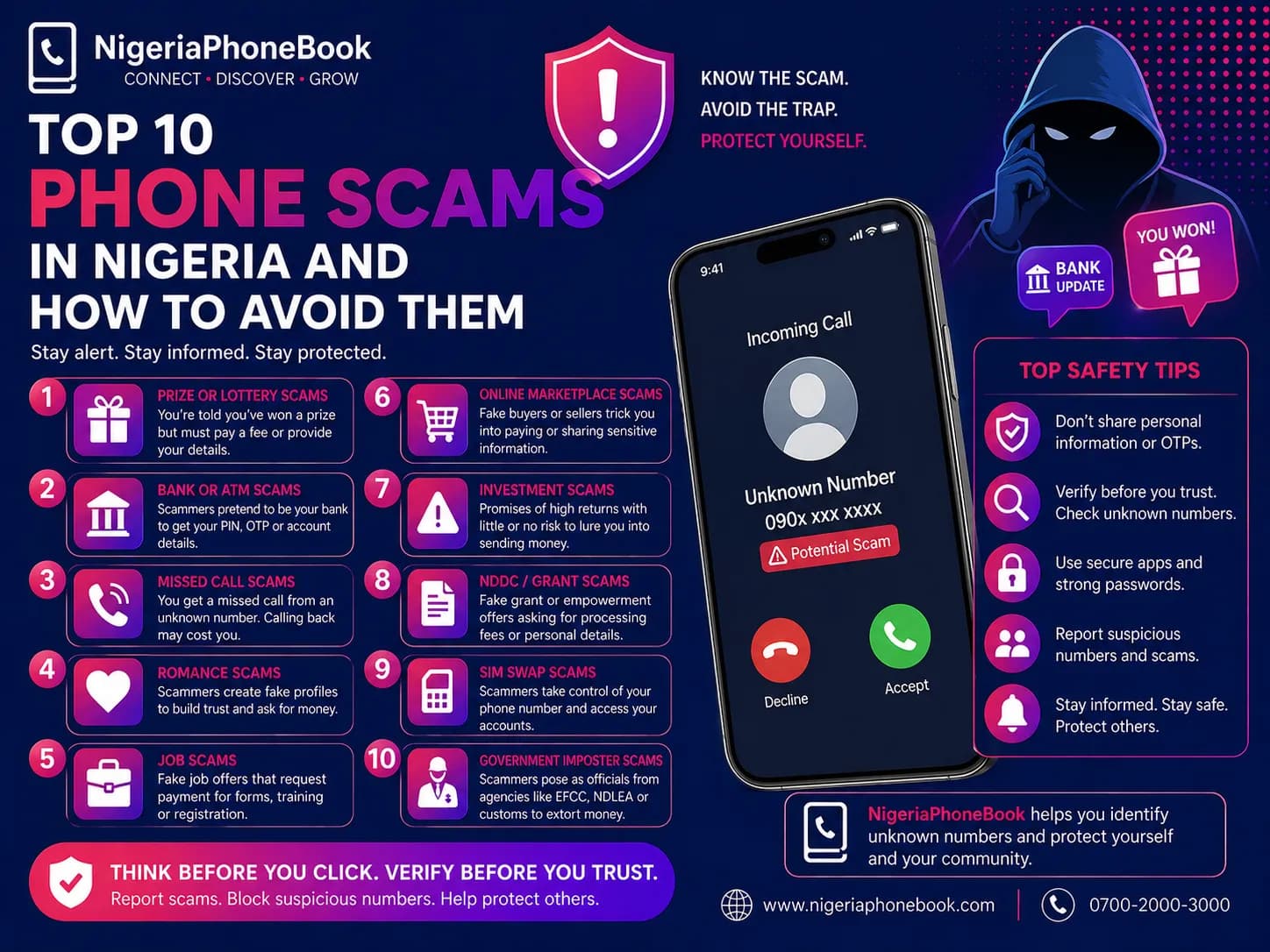
Top 10 Phone Scams in Nigeria and How to Avoid Them
Phone scams in Nigeria have become increasingly sophisticated. Every year, thousands of Nigerians lose millions of naira to fraudsters operating over phone calls, SMS, and messaging apps. At NigeriaPhoneBook, we believe awareness is the first line of defense.
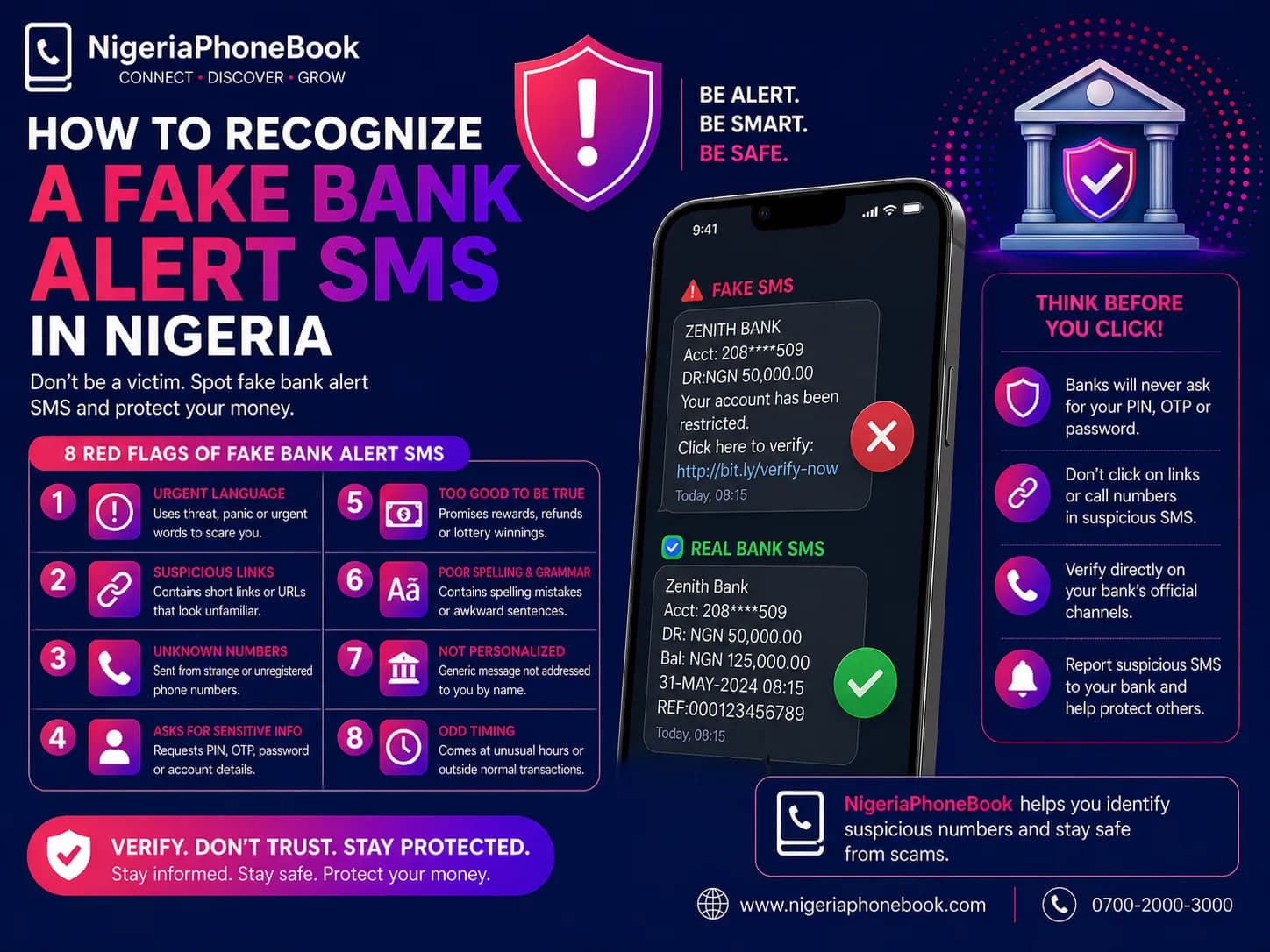
1. Fake Bank Alerts
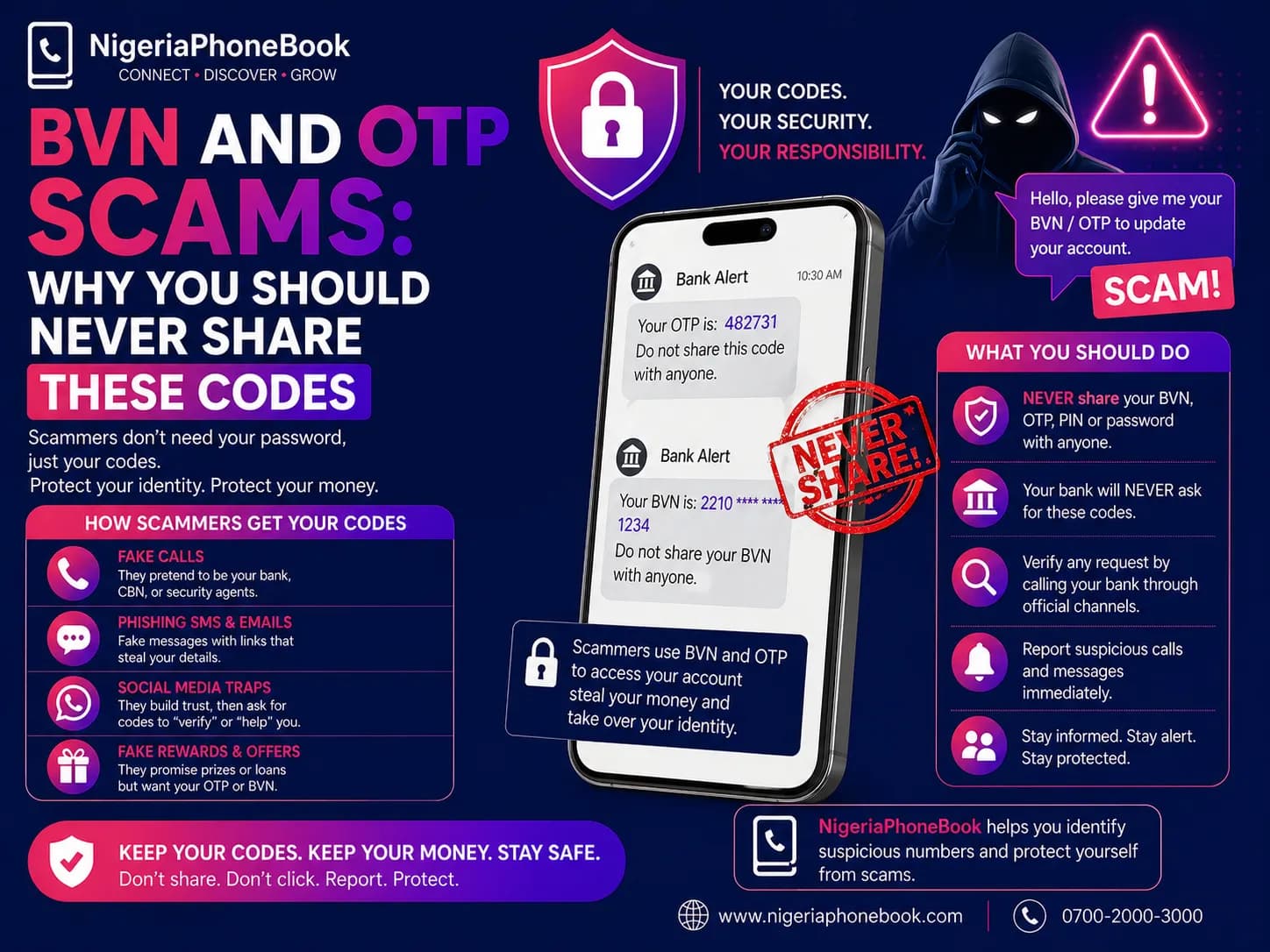
Scammers send SMS pretending to be from your bank, claiming suspicious activity on your account. They include a phone number to call — and when you do, they ask for your BVN, PIN, or OTP.
How to avoid: Never call numbers in SMS alerts. Always use the official number on the back of your ATM card or the bank's verified app.
2. 419 Advance Fee Fraud
The classic Nigerian scam: someone promises a large inheritance, lottery win, or business opportunity — but you must pay "processing fees" upfront.
How to avoid: Legitimate prizes never require upfront payments. If it sounds too good to be true, it is.
3. Impersonation Scams
Fraudsters call pretending to be from NIMC, EFCC, your bank, or even the police. They claim your account is compromised and pressure you to act fast.
How to avoid: Hang up and call the official number yourself. Government agencies never demand immediate payment over the phone.
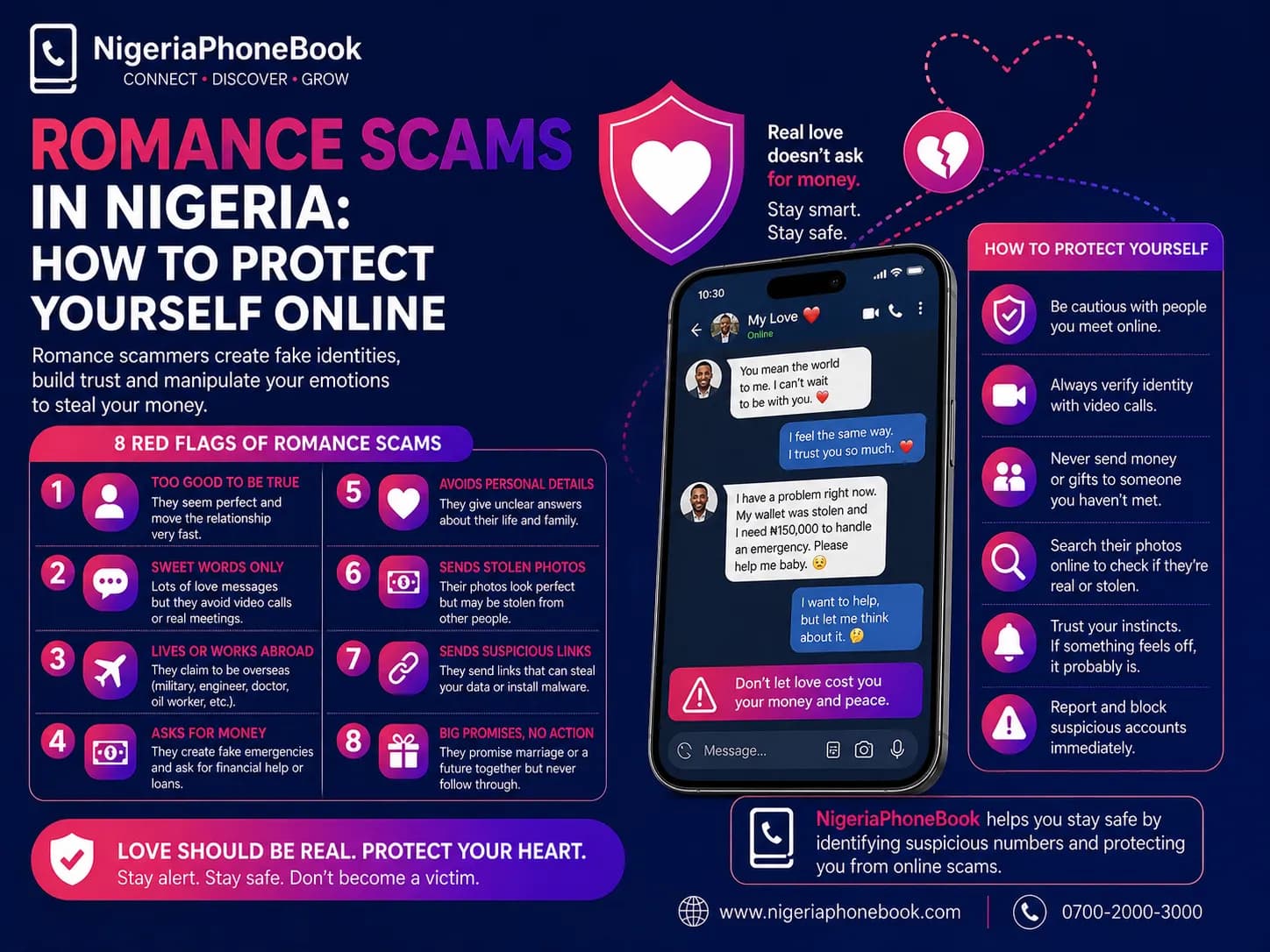
4. Romance Scams
Scammers build relationships on dating apps or social media, then ask for money for emergencies, flights, or medical bills.
How to avoid: Never send money to someone you haven't met in person. Video call before trusting.
5. Fake Job Offers
You receive a call about a job you never applied for. The "employer" asks for a training fee or registration payment.
How to avoid: Legitimate employers never charge job seekers. Research the company on LinkedIn and their official website.
6. Phishing Links via SMS
Messages claim you've won a prize or your account needs verification, with a shortened link. Clicking it steals your login credentials.
How to avoid: Never click links in unexpected SMS. Type the URL manually into your browser.
7. Fake Customer Service Calls
Scammers call claiming to be from MTN, GLO, Airtel, or 9Mobile offering free data or refunds. They ask for your PIN or OTP.
How to avoid: Your telco will never ask for your PIN or OTP over the phone.
8. Wrong Number / Money Transfer Scam
"Please, madam, I sent money to your number by mistake. Please return it." The "refund" they sent was a fake alert.
How to avoid: Wait 24 hours. Confirm with your bank that the money actually arrived.
9. Kidnapping / Ransom Threats
Calls claim a family member has been kidnapped and demand immediate payment. The caller creates panic and urgency.
How to avoid: Stay calm. Try to contact the "kidnapped" person directly. Call the police.
10. Charity / Disaster Relief Scams
Scammers exploit emergencies by posing as charity workers asking for donations to victims.
How to avoid: Donate only through registered NGOs and verified accounts. Ask for official documentation.
How NigeriaPhoneBook Helps
Our community-driven database lets you check any Nigerian phone number before you answer or respond. You can:
- Search any number to see reported scam activity
- Read community warnings about suspicious callers
- Report scam numbers to protect others
- Check reputation based on aggregated reports
Stay safe. If a call feels off, trust your instincts, hang up, and verify independently.
Written by
NigeriaPhoneBook Team
Contributor at NigeriaPhoneBook. Writing about scam awareness, digital safety, and protecting consumers from fraud.