How to Recognize a Fake Bank Alert SMS in Nigeria
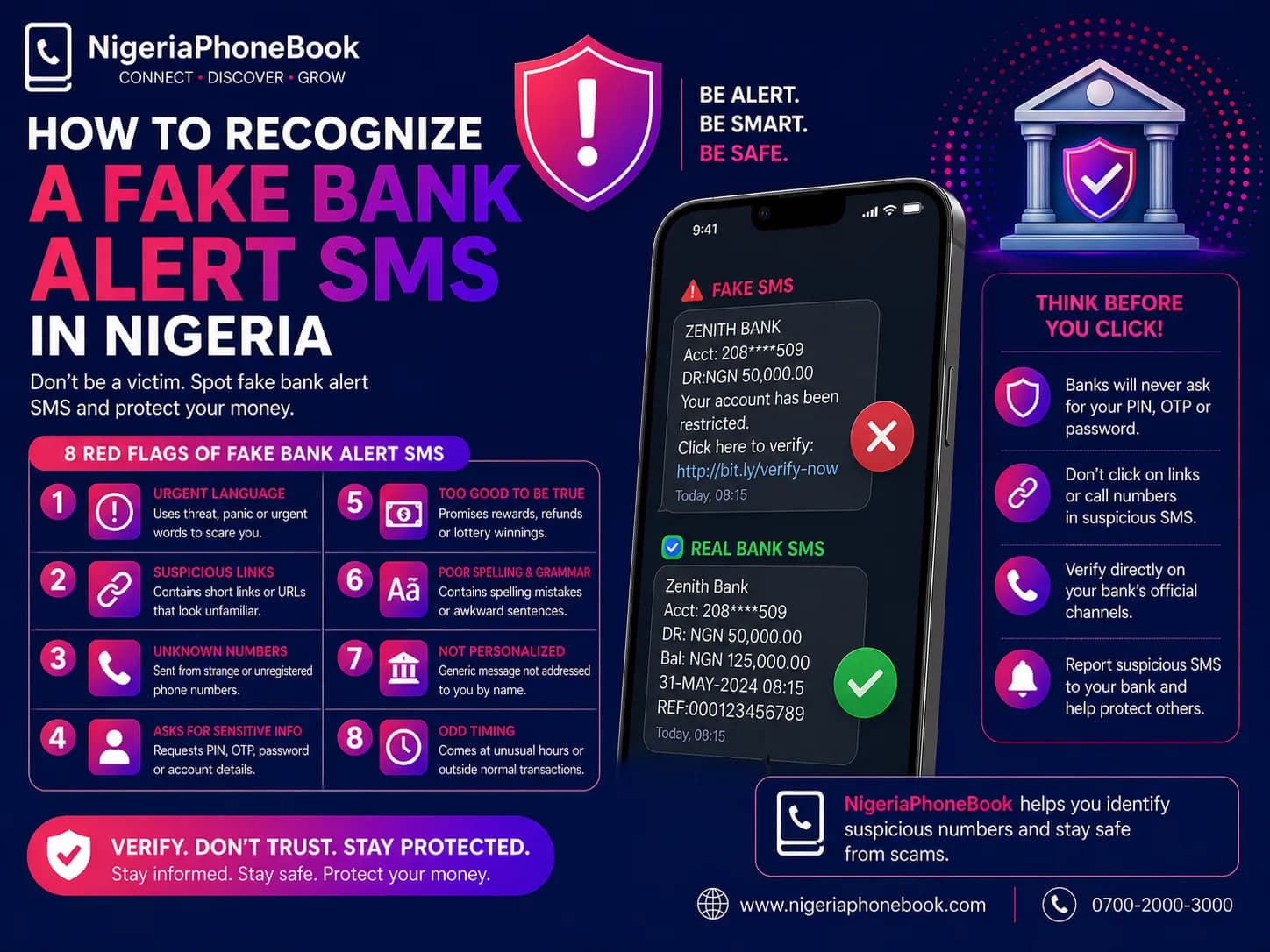
Fake bank alerts are one of the most common scams in Nigeria. Scammers send SMS messages that look identical to real bank notifications, tricking victims into believing money has been deposited into their account.
The Classic Fake Alert Scam
The scam typically works like this:
- A "buyer" agrees to purchase your goods
- They claim to have sent the payment
- You receive an SMS that looks like a bank credit alert
- You release the goods
- You later discover no money was ever sent
Red Flags to Watch For
1. Sender ID Mismatch
Real bank alerts come from the bank's official short code (e.g., "GTBank", "UBA", "Zenith"). Fake alerts often come from random phone numbers or unofficial sender IDs.
2. Spelling and Grammar Errors
Banks use templated messages. Typos like "Credt" instead of "Credit" or "Amt" instead of "Amount" are giveaways.
3. Missing Balance Information
Real alerts always include your new available balance. Fake alerts often omit this or show round, suspicious numbers.
4. Unusual Time
Instant transfers work 24/7, but alerts that arrive exactly when a buyer is pressuring you are suspicious.
5. No Matching Entry in Bank App
The most reliable test: open your official bank app. If the transaction isn't there, the alert is fake.
What to Do When You Receive a Suspicious Alert
- Don't release any goods until you verify
- Check your official bank app — not SMS
- Call your bank's official customer care using the number on your ATM card
- Report the sender to your bank and the EFCC
- Report the phone number on NigeriaPhoneBook to warn others
Stay Protected
Always verify transactions independently. Never rely on SMS alone for high-value transactions. When in doubt, wait for funds to reflect in your actual bank balance before acting.
Written by
NigeriaPhoneBook Team
Contributor at NigeriaPhoneBook. Writing about scam awareness, digital safety, and protecting consumers from fraud.