Cryptocurrency Scams Targeting Nigerians: Red Flags to Know
Nigeria has one of the highest rates of cryptocurrency adoption in the world. But with opportunity comes risk — crypto scams have cost Nigerians billions of naira.
Common Crypto Scams
1. Ponzi Schemes (MMM-Style)
Platforms promising guaranteed daily or weekly returns. They pay early investors with money from new investors until the scheme collapses.
Examples: Racksterli, Crowd1, many "investment platforms" on Telegram.
2. Fake Exchanges
Websites that look like legitimate exchanges but steal your deposits. Often promoted through WhatsApp groups and Facebook ads.
3. Phishing Wallets
Fake wallet apps or browser extensions that steal your seed phrase the moment you enter it.
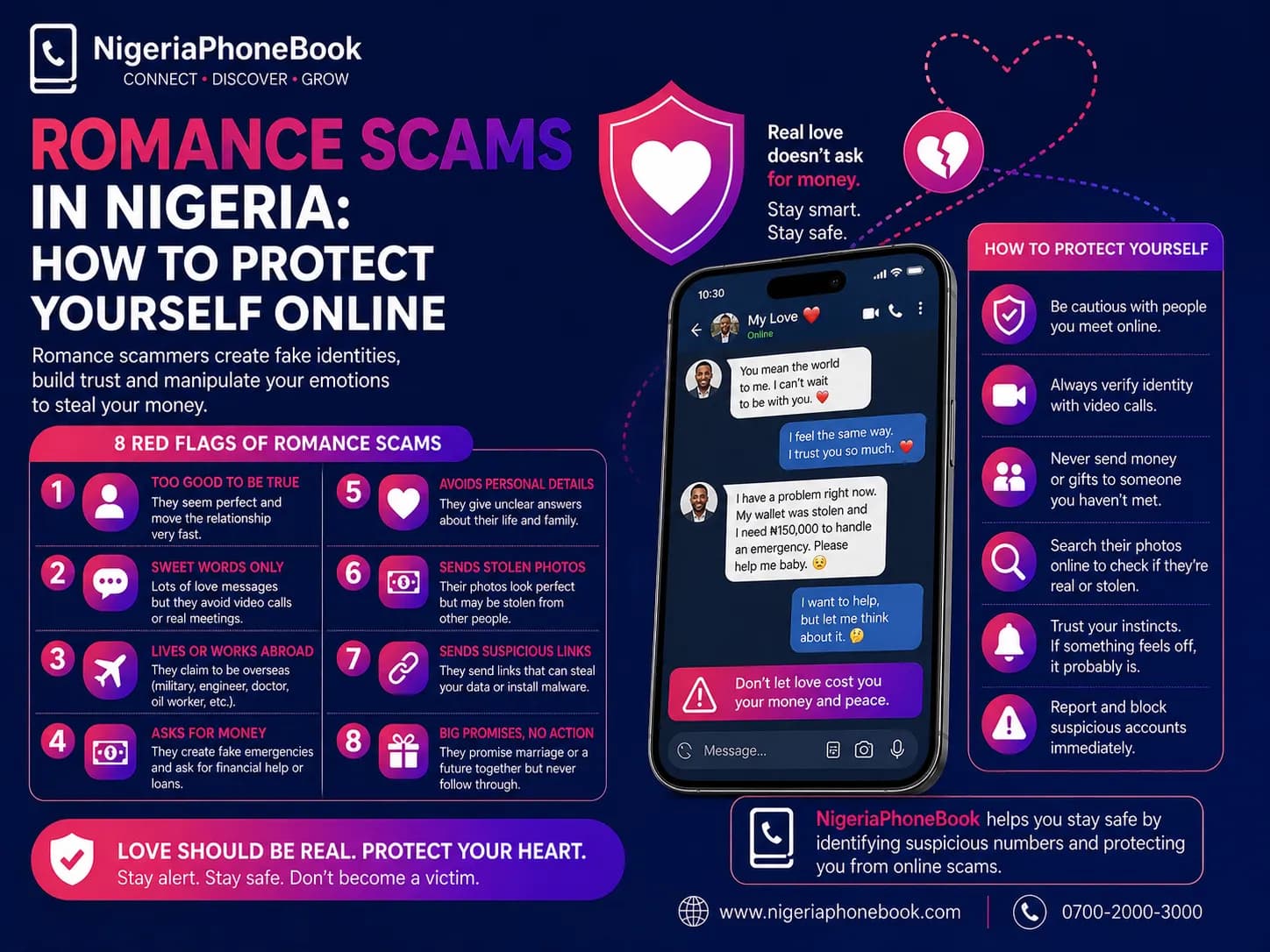
4. Romance + Crypto
The scammer builds a romantic relationship, then convinces you to "invest" through their "trading platform." You see fake profits but can never withdraw.
5. Pump and Dump Schemes
A group coordinates to buy a small coin, pumps the price through fake hype, then dumps their holdings — leaving later buyers with worthless tokens.
6. Fake Celebrities and Influencers
"Davido is giving away 1 BTC to the first 100 people who send 0.01 BTC!" Davido is not. This is theft.
7. Recovery Scams
After you've been scammed, a "recovery agent" contacts you promising to get your money back — for a fee. They're the second layer of the scam.
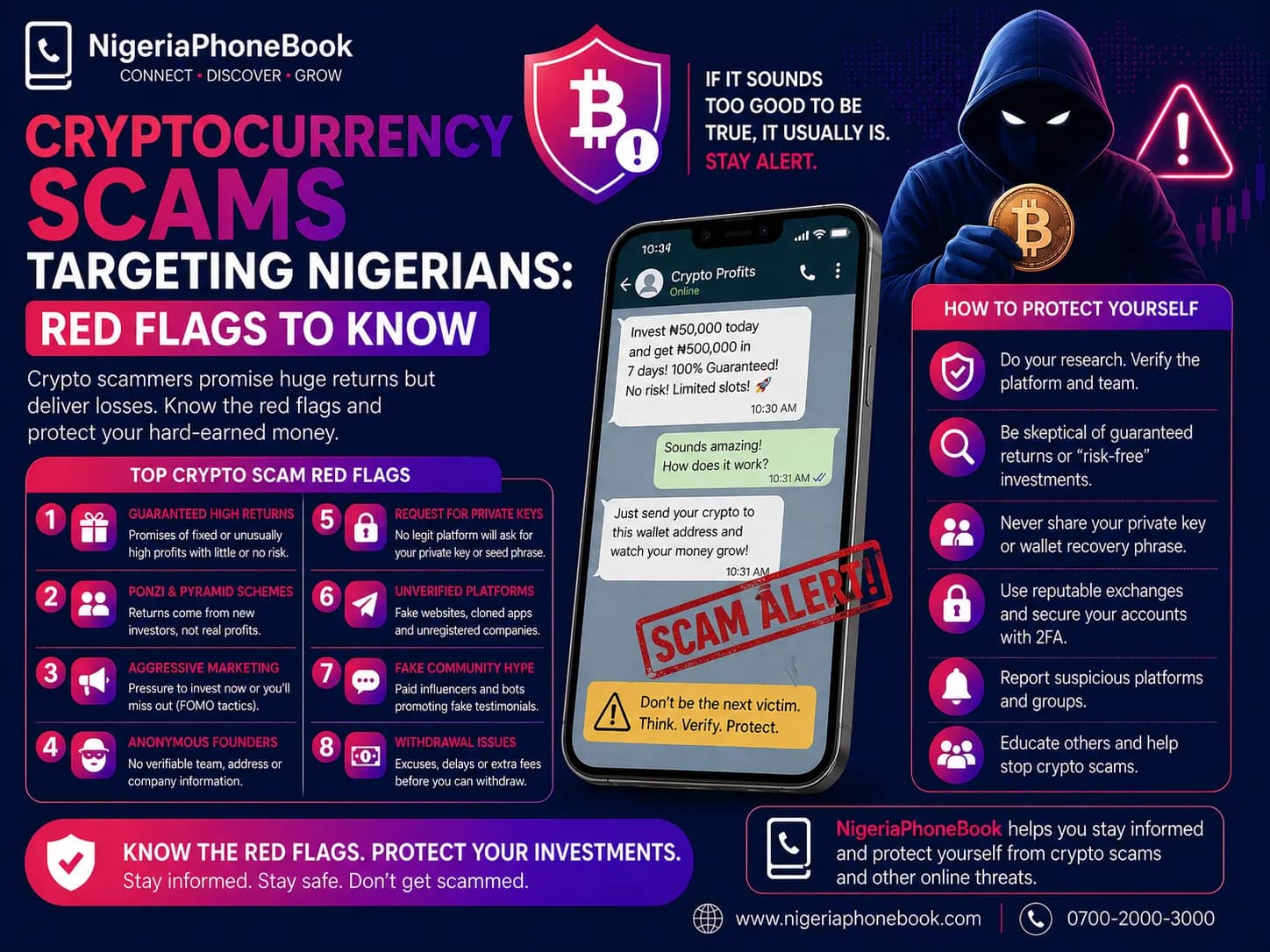
Red Flags of Crypto Scams
- Guaranteed returns — no real investment guarantees anything
- Pressure to invest quickly — "Prices going up, act now!"
- Referral bonuses — classic Ponzi structure
- Celebrity endorsements you can't verify
- Unregulated platforms without CBN or SEC registration
- Only accepts crypto deposits (can't reverse)
- Withdrawal problems when you try to cash out
- Anonymous team with no LinkedIn profiles
- Copy-pasted website from real exchanges
How to Invest Safely
1. Use Reputable Platforms
Stick to well-known exchanges like Binance, Quidax, or Yellow Card. Research thoroughly before using any platform.
2. Secure Your Wallet
- Use hardware wallets for large holdings
- Never share your seed phrase
- Enable 2FA on all crypto accounts
- Don't store crypto on exchanges long-term
3. Do Your Own Research (DYOR)
- Read the whitepaper
- Check the team and their LinkedIn profiles
- Look at the token's actual use case
- Verify audits and smart contract reviews
4. Start Small
Never invest more than you can afford to lose. Crypto is volatile even on legitimate platforms.
5. Beware of "Too Good to Be True"
Warren Buffett averages ~20% per year. If someone promises 20% per week, they're lying.
6. Avoid FOMO
Fear of missing out is the #1 reason people fall for crypto scams. The best opportunities come from patience, not panic.
If You've Been Scammed
- Stop sending money immediately
- Document everything — transaction IDs, screenshots, wallet addresses
- Report to the EFCC
- Report to the exchange if fiat was involved
- Report the scammer's contacts on NigeriaPhoneBook
- Do NOT engage with "recovery services" — they're scams too
The Hard Truth
Most crypto scam losses cannot be recovered. Blockchain transactions are irreversible. The best defense is prevention — skepticism, education, and patience.
Crypto can be a legitimate investment, but it's also a playground for scammers. Learn the difference between the two, or you'll be the one paying tuition.
Written by
NigeriaPhoneBook Team
Contributor at NigeriaPhoneBook. Writing about scam awareness, digital safety, and protecting consumers from fraud.