How to Protect Your Personal Information from Phone Scammers
In today's digital world, your phone number is linked to your bank accounts, social media, email, and identity. Protecting it is essential.
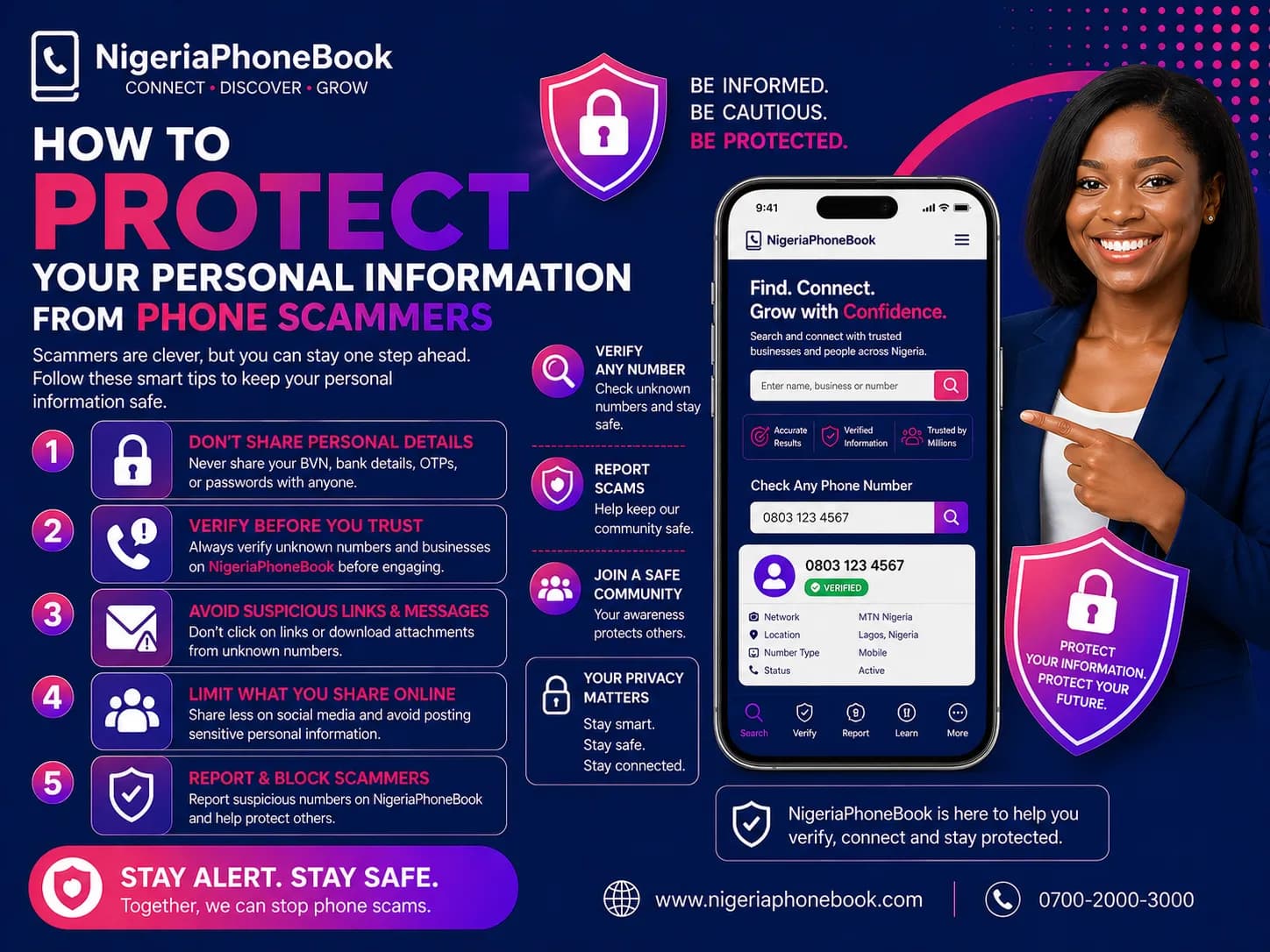
Information You Should Never Share Over the Phone
Regardless of who claims to be calling, never share:
- Your BVN (Bank Verification Number)
- Your ATM PIN
- Any OTP (One-Time Password)
- Your CVV (the 3 digits on the back of your card)
- Your online banking password
- Your National ID number (NIN) unless you initiated the call to a verified agency
No legitimate bank, government agency, or company will ever ask for these over an unsolicited call.
Common Social Engineering Tactics
Creating Urgency
"Your account will be blocked in 10 minutes if you don't verify." This pressure prevents you from thinking clearly.
Claiming Authority
"This is Inspector Bello from the EFCC." Scammers impersonate officials to intimidate victims.
Offering Rewards
"You've won a cash prize! Just pay the processing fee." Greed short-circuits caution.
Building Trust
"I'm from your bank. Let me help you secure your account." Scammers pose as helpers to gain access.
Best Practices for Phone Security
1. Enable Two-Factor Authentication (2FA) on all important accounts — but use an authenticator app, not SMS, when possible.
2. Lock your SIM card with a PIN. If your phone is stolen, the thief can't use it without the PIN.
3. Be careful with phone number sharing. Don't post your number publicly on social media.
4. Use caller ID apps like NigeriaPhoneBook to screen unknown numbers.
5. Never call back unknown numbers from missed calls — especially international ones. This can trigger premium-rate charges.
6. Keep your phone's OS updated. Security patches protect against known exploits.
7. Review app permissions regularly. Does that random app really need access to your contacts and messages?
What to Do If You've Been Compromised
- Change your banking passwords immediately
- Call your bank to freeze accounts
- Report to the police and EFCC
- Notify your telco to block your SIM if stolen
- Alert your contacts — scammers may impersonate you
- Monitor your accounts for suspicious activity
The Bottom Line
Your personal information is valuable. Treat it like cash — don't hand it out casually. When in doubt, hang up and verify through official channels.
Written by
NigeriaPhoneBook Team
Contributor at NigeriaPhoneBook. Writing about scam awareness, digital safety, and protecting consumers from fraud.